Micro and Macro Economics
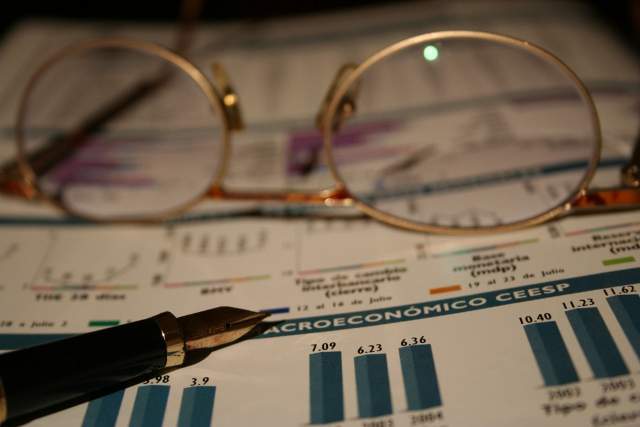
The most common division of economics is that which separates macroeconomics from microeconomics. The difference between macro and micro was introduced in 1933 by the Norwegian, Ragnar Frisch. The origin of the words says a lot about their meaning: in Greek, macro means big and micro means small.
Macroeconomics studies the behavior of economic aggregates. Macroeconomic variables are associated with economic aggregates: a country, a region, the population of a country, all companies in a country. For example, the aggregate production of a country is formed with the production of all its businesses, families, individuals, and its public sector. Other commonly used variables in the study of macroeconomics are inflation and unemployment. John Maynard Keynes is considered to be one of the most important contributors to the analysis of Macro and Micro economics.
Microeconomics studies the behavior of individual economic units, like individuals, families, businesses, and the markets in which they operate. This is why it is also commonly known as the science that studies the allocation of scarce resources among alternative purposes. Microeconomic theory uses formal models that attempt to explain and predict the behavior of consumers and producers with simplifying assumptions. Microeconomic analysis is associated with the theory of prices and its derivations. Alfred Marshall is considered to be the greatest contributor to microeconomic analysis.